Medical Tourism
The World Is Choosing India for Medical Care.

MBBS, Fellowship in Emergency Medicine
Dr. Saurav
Updated
Aug 30, 2026
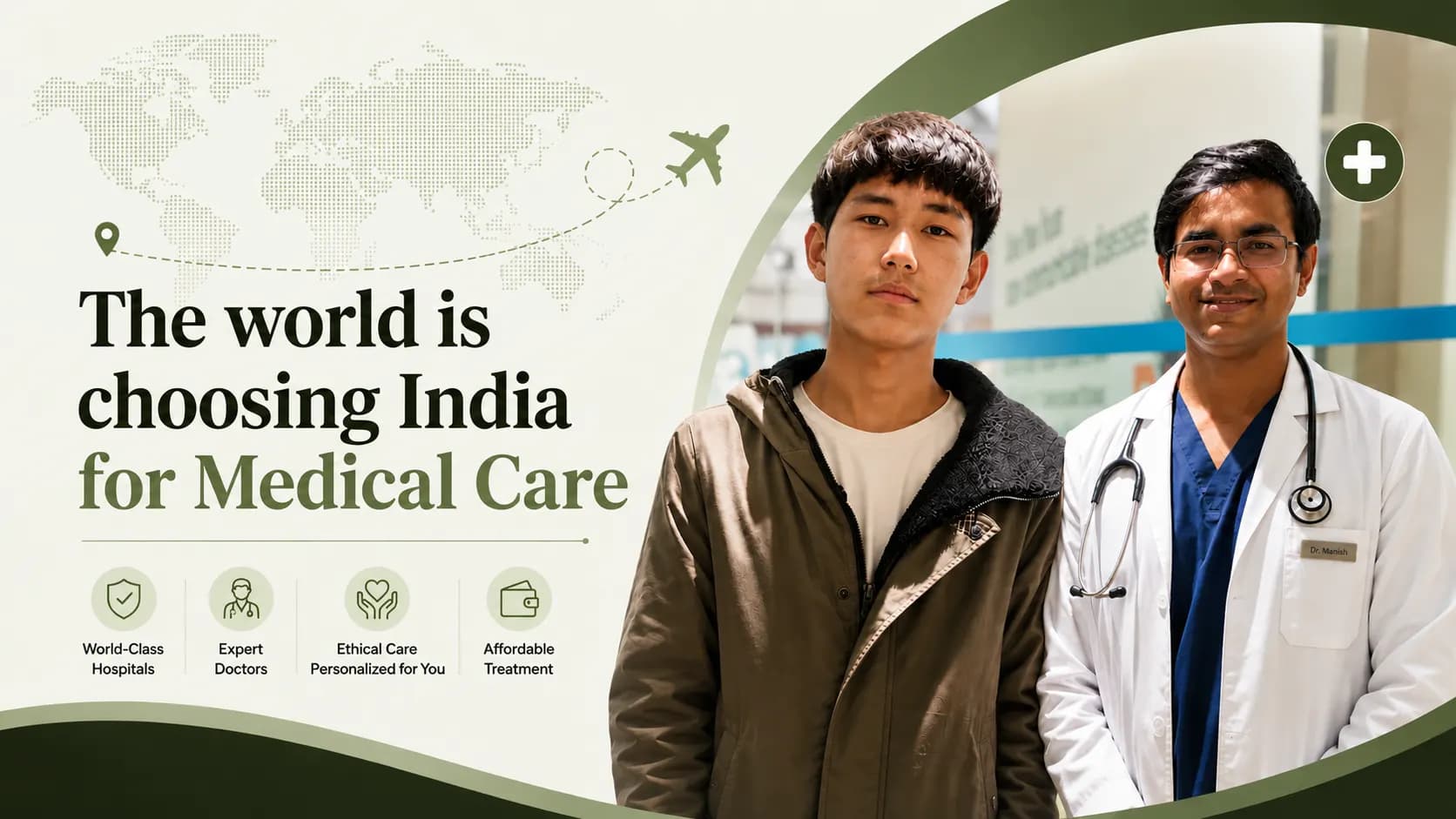
Healthcare no longer stops at borders. Every year, patients from Africa, the Middle East, Southeast Asia, Europe, and North America travel to India for treatment that's advanced, affordable, and delivered with genuine care.
But choosing to treat abroad isn't just a medical decision instead it's an emotional and financial one too. Today's international patients aren't just looking for "the best hospital."
They're looking for trust, safety, guidance, affordability, and transparency, all at once.
India's private hospitals have built a reputation on exactly these fronts: internationally trained doctors, cutting-edge technology, shorter waiting times, and treatment costs that are a fraction of what patients pay back home without compromising on quality.
What Can Patients Actually Get Treated For?
India's top hospitals now cover nearly every major specialty, including:
1. Robotic and minimally invasive surgeries
2. Organ transplants
3. Precision oncology and cancer care
4. Fertility and IVF treatment
5. Neurology and spine surgery
6. Cardiac procedures
7. Cosmetic and reconstructive surgery
8. AI-assisted diagnostics and advanced ICU care
Most major hospitals also run dedicated international patient departments and teams that handle everything from visa paperwork to recovery support, so patients aren't navigating a new healthcare system alone.
Will Treatment in India Actually Save Money?
For most patients, yes that too significantly. Treatment costs in India typically run far lower than in the US, UK, Europe, or the Gulf, without a drop in clinical standards.
That said, the real cost of care isn't just the surgery bill. Before deciding, patients should also weigh:
1. Hospital reputation and doctor expertise
2. Hidden or add-on expenses
3. Accommodation and stay costs
4. Recovery timelines
5. Long-term follow-up support
How Do You Know a Hospital Is Trustworthy?
This is the quiet worry behind almost every decision. Before committing, patients should check for:
1. JCI and NABH accreditation
2. Doctor specialization and track record
3. ICU, emergency, and infection-control infrastructure
4. Transparent, responsive communication
5. Genuine (not curated) patient reviews
But accreditation only tells half the story. Real trust is built through honest conversations, realistic expectations about recovery, and a hospital's willingness to answer every question — no matter how small.
How Do Patients Actually Find the Right Doctor or Hospital?
There's no single path so most patients use a mix of these:
1.Hospital international patient departments: Best for patients who already know where they want to go and are comfortable coordinating travel themselves. These teams handle report uploads, consultations, cost estimates, and visa letters directly.
2. Medical tourism facilitators: The go-to option for first-time patients, elderly travelers, complex surgeries, or anyone bringing family along. Facilitators shortlist hospitals, arrange consultations, manage visas and logistics, and with facilitators like Zivanta stay involved even after the patient returns home through follow-up coordination.
3.Referrals from past patients: Word-of-mouth from family, friends, or community members who've already been through the process remains one of the strongest trust signals in medical travel.
4.Online doctor consultations: A fast-growing first step. Patients can discuss diagnosis, treatment options, and costs virtually before ever booking a flight, often building trust with a doctor before they've even left home.
5.Local doctors and healthcare networks: Referrals through a patient's home-country physician, insurance network, or embassy, based on known outcomes and hospital reputation.
6.Independent research: Many patients start here - searching for top hospitals, doctors, and success rates online. It's a useful starting point, but claims should always be cross-checked rather than taken at face value.
Hospitals vs. Facilitators: What's the Difference?
A common misconception is that hospitals and medical tourism companies do the same job. They don't.
Hospitals focus purely on the clinical journey: diagnosis, treatment, surgery, and in-hospital recovery.
Facilitators handle everything around it: comparing treatment options, visa guidance, appointment scheduling, interpreters, accommodation, local transport, and day-to-day support during the stay.
Some facilitators, Zivanta, don't just stop there, they stay connected after the patient flies home, coordinating follow-up consultations, recovery guidance, and ongoing communication with the hospital.
For first-time medical travelers especially, that continuity often matters more than the treatment itself.
The Bottom Line
Seeking treatment abroad was never really about finding a hospital. It's about feeling safe, informed, and supported at every step of a life-changing decision.
India's healthcare ecosystem keeps earning global trust because it delivers on all fronts at once - advanced expertise, affordable care, modern infrastructure, and support systems built around the patient, not just the procedure.
The most important step for any international patient isn't finding the "best" hospital - it's asking the right questions before choosing one.