Treatment Guides
Is Colon Cancer Curable?
MBBS, Fellowship in Emergency Medicine
Dr. Saurav
Updated
Oct 3, 2026
Is Colon Cancer Curable?
- What Is Colon Cancer?
- Who Gets Colon Cancer?
- Early Signs and Symptoms of Colon Cancer
- Cure vs. Remission: What's the Difference?
- Can Colon Cancer Be Cured? What the Evidence Shows
- Factors That Affect the Chances of a Cure
- Treatment Options for Colon Cancer
- How Early Detection Improves Your Chances
- Life After Colon Cancer Treatment
- Frequently Asked Questions
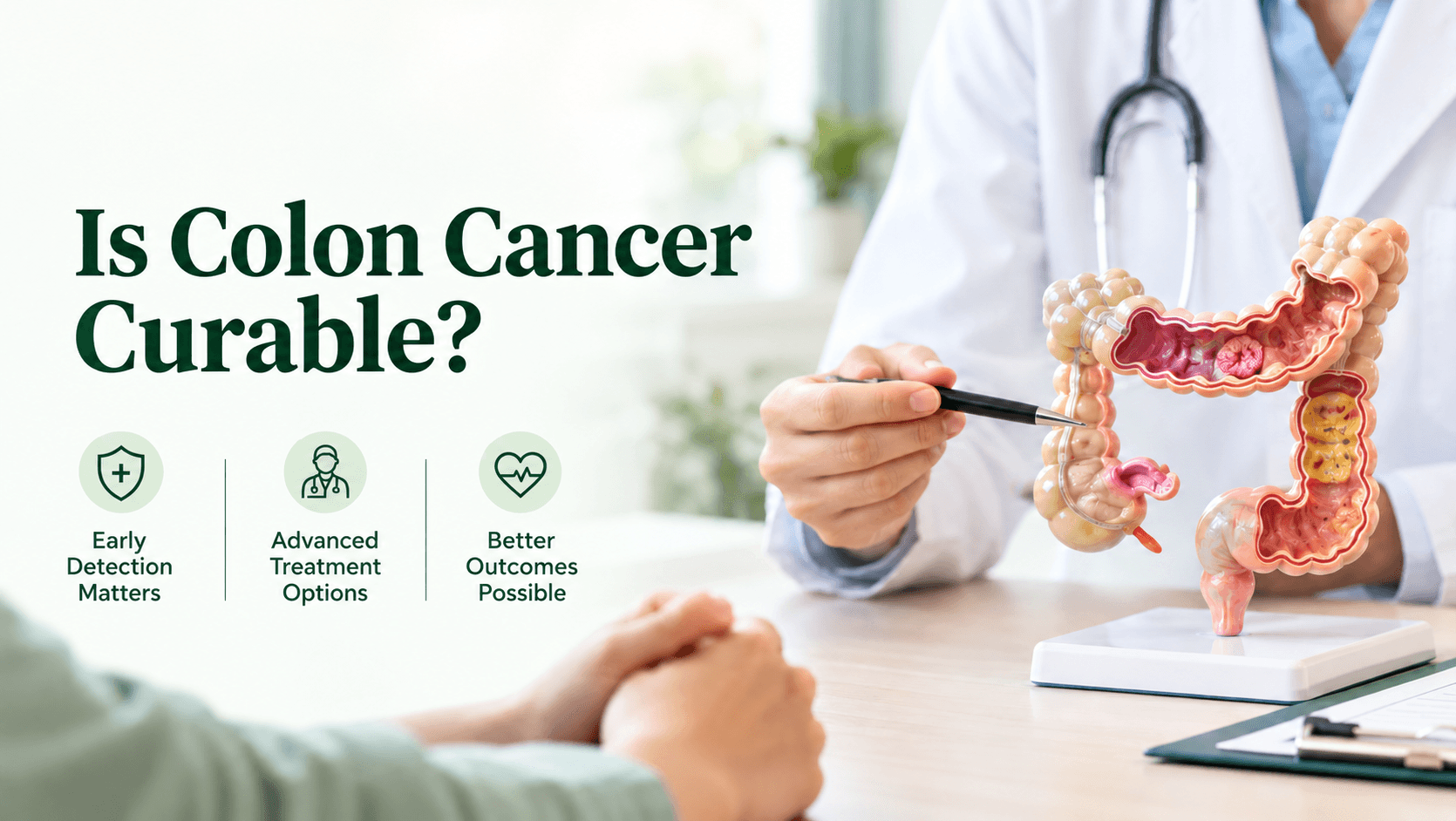
Yes, colon cancer, also called colorectal or bowel cancer, is often curable, particularly when it's found early. It's one of the most common cancers worldwide, and while that can be frightening to read as a new diagnosis, advances in screening, surgery and treatment have meaningfully improved outcomes for many patients over the past two decades. This guide explains what affects the chances of a cure, what the data actually shows, and what to ask your care team next.
Confused about your treatment options? Get a second opinion from an oncologist before deciding on next steps.
What Is Colon Cancer?
Colon cancer starts in the large intestine (colon) and is grouped together with rectal cancer under the broader term colorectal cancer, "bowel cancer" is simply another name for the same disease. According to the World Health Organization, colorectal cancer is the third most common cancer diagnosed worldwide and the second leading cause of cancer-related death, with close to 1.9 million new cases and more than 900,000 deaths estimated globally in a recent year. Risk rises with age, though a growing number of countries are reporting more cases among younger adults as well.
Who Gets Colon Cancer?
Colon cancer can affect anyone, but risk increases with age, and most cases occur in people over 50, though younger adults, including people in their 20s and 30s, can and do get it, which is part of why persistent symptoms shouldn't be ignored regardless of age. Both men and women get colon cancer. Risk factors include a personal or family history of colorectal cancer or polyps, certain inherited genetic conditions, inflammatory bowel disease, and lifestyle factors such as diet, physical inactivity, smoking and alcohol use.
Early Signs and Symptoms of Colon Cancer
Early colon cancer often causes no symptoms at all, which is one reason screening matters even when you feel well. When symptoms do appear, they can include:
A lasting change in bowel habits, such as diarrhea or constipation
Blood in or on the stool
Persistent abdominal pain, cramping or bloating
A feeling that the bowel doesn't empty completely
Unexplained weight loss
Ongoing fatigue or weakness
Occasional bloating, gas or a short bout of diarrhea is common and usually isn't a sign of cancer. What matters is a pattern that's new, persistent, or doesn't resolve — that's what's worth raising with a doctor, especially alongside any of the other symptoms above.
Cure vs. Remission: What's the Difference?
These two words are often used interchangeably, but they mean different things. A cure means there's no evidence of cancer after treatment, and it isn't expected to return, though follow-up monitoring still continues. Remission means the cancer has responded to treatment and its signs and symptoms have partly or fully disappeared, without necessarily meaning it's gone for good. Understanding this distinction can help you ask clearer questions about what a specific treatment plan is actually aiming for in your case.
Can Colon Cancer Be Cured? What the Evidence Shows
The honest answer is: it depends heavily on the stage at diagnosis, though outcomes have improved across the board. According to American Cancer Society data based on SEER figures, 5-year relative survival for colon cancer is around 91% when the cancer is localized (confined to the colon), about 72% when it has spread regionally to nearby tissue or lymph nodes, and around 13% once it has spread to distant organs. These are population-level statistics, not a prediction for any individual, your own outlook depends on your specific diagnosis, overall health and how your cancer responds to treatment.
Stage and general outlook:
Stage | Typical Outlook |
Stage 0 | Very high chance of cure; abnormal tissue removed before it becomes invasive |
Stage I | Often curable with surgery alone |
Stage II | Many cases curable; chemotherapy considered for some based on risk factors |
Stage III | Potentially curable; surgery plus chemotherapy aims to clear the cancer and reduce recurrence risk |
Stage IV | Cure is less common but possible in select cases; treatment often focuses on control, survival and quality of life |
Factors That Affect the Chances of a Cure
A few things influence an individual's outlook, according to major cancer organizations such as the National Cancer Institute and American Cancer Society:
Stage at diagnosis - earlier-stage cancers are generally more straightforward to treat
Tumor characteristics - size, location, and genetic or molecular features that may affect which treatments will work
Overall health - age and existing health conditions can affect how well someone tolerates treatment
Response to treatment - some tumors respond better than others to chemotherapy, targeted therapy or immunotherapy
Timely diagnosis - earlier detection generally means more treatment options and a better likelihood of successful treatment
Treatment Options for Colon Cancer
Most treatment plans combine one or more of the following, depending on stage and individual factors:
Surgery - the primary treatment for most early-stage colon cancers; removes the tumor and surrounding tissue, and can be curative on its own when caught early
Chemotherapy - often used after surgery for some Stage II and most Stage III cancers to reduce recurrence risk, and in Stage IV disease to control symptoms and extend survival
Targeted therapy - aimed at specific changes within cancer cells, typically used for advanced disease, often alongside chemotherapy
Immunotherapy - helps the immune system recognize and attack cancer cells; particularly relevant for tumors with specific genetic features
Radiation therapy - used less often in colon cancer than rectal cancer, but may help in certain situations or to relieve symptoms
Side effects vary from person to person, and many can be managed with supportive care, it's worth telling your care team about any new or worsening symptoms during treatment.
How Early Detection Improves Your Chances
Because early colon cancer can develop silently, screening is the main way it's caught before symptoms appear. Common screening approaches include:
Colonoscopy - examines the full colon and can remove precancerous polyps during the same procedure
Stool-based tests - check for hidden blood or abnormal DNA, flagging who may need a follow-up colonoscopy
CT colonography - a CT-based scan of the colon and rectum
Average-risk screening is generally recommended starting around age 45, though people with a family history, certain genetic conditions, or other risk factors may need to start earlier, your doctor can advise on the right schedule for you.
Life After Colon Cancer Treatment
Recovery looks different for everyone, but most people gradually return to their routine after treatment, alongside ongoing follow-up care. This typically includes physical exams, blood tests, imaging, and periodic colonoscopies to monitor for recurrence. Maintaining a balanced diet, staying active, avoiding tobacco, limiting alcohol, and keeping up with scheduled appointments all support long-term recovery. It's also common to experience a mix of emotions after treatment, connecting with loved ones, a support group, or a mental health professional can help.
This article provides general health information and is not a substitute for individual medical advice or diagnosis. If you're experiencing persistent symptoms or have risk factors for colon cancer, speak with a doctor about screening and next steps.
Get a Second Opinion from Our Oncology Team
If you or a family member has been diagnosed with colon cancer, our International Patient Care Team can help you connect with experienced oncologists in India for a medical opinion on your treatment plan.
Frequently Asked Questions
Q1: Can colon cancer come back after treatment?
Ans1: Yes, recurrence is possible, and the risk depends on the stage treated, the treatment received, and individual health factors. Regular follow-up helps catch any recurrence early.
Q2: Is Stage IV colon cancer curable?
Ans: It's more challenging to cure once cancer has spread to distant organs, but in select cases, particularly when the spread is limited and can be fully removed surgically, a cure is still possible. Often, treatment focuses on controlling the disease and extending survival with good quality of life.
Q3: Is colon cancer the same as colorectal or bowel cancer?
Ans: Yes. "Colorectal cancer" refers to cancer of the colon and/or rectum, and "bowel cancer" is another common name for the same disease.
Q4: What are the early warning signs of colon cancer?
Ans: Persistent changes in bowel habits, blood in the stool, ongoing abdominal pain or bloating, a feeling of incomplete bowel emptying, unexplained weight loss, and ongoing fatigue are worth discussing with a doctor, especially if they persist.
Q5: Is bloating or gas a sign of colon cancer?
Ans: Occasional bloating or gas is common and rarely a sign of cancer on its own. It's the combination with other persistent symptoms, or a pattern that doesn't go away, that's worth getting checked.
Q6: At what age should colon cancer screening start?
Ans: Generally around age 45 for people at average risk, though those with a family history or other risk factors may need to start earlier.
Q7: Can colon cancer be cured without surgery?
Ans: Surgery offers the best chance of a cure for most early-stage colon cancers. When surgery isn't possible or the disease is advanced, chemotherapy, targeted therapy or immunotherapy may help control it instead.